
We love to read. We do it on-line, but we also love to hold the printed book or a magazine in our hands and flip through pages, smell the ink... As internet and new media devices develop and offer more engaged reading experience - as for example now new iPad, reading on-line becomes more and more attractive. True, you can't smell the ink (yet), but there are some projects at work which are making on-line reading (or reading on a device) more and more appealing. We have been writing already about digital magazines as seen by Mag+, and we've got an exciting letter from them - their fist Mag+ digital magazine is live: Popular Science+.
Mag+, Bonnier’s digital magazine platform, is a project that began months ago in a collaboration between Bonnier’s global R&D task force and BERG, a London-based design studio. It is now an ongoing project across all Bonnier titles in the U.S. and Europe to rethink the way magazines can be read on a new generation of full-color, touchscreen tablet devices. It’s been a fascinating journey with only 60 days available since Apple announced the iPad in San Francisco. They’ve had 6 editorial teams in 3 countries working together to re-imagine the form of magazines. The feedback from the Mag+ video was encouraging and since then they have been deconstructing tons of magazines, used more whiteboard space than any project before and building many many prototypes. They can be really proud of what they've have achieved together with the PopularScience+. And - without a doubt - there is a lot more to come.
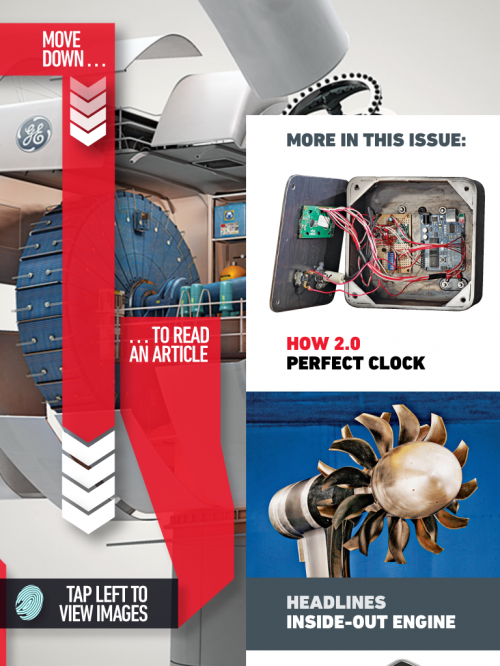
Their design vision was to create a digital magazine, which should feel like if you are touching the actual magazine, using your natural body language – not looking through the screen and layers of buttons.
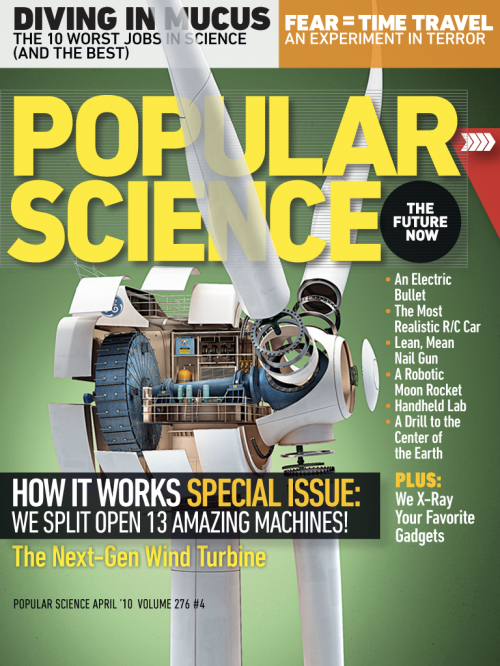
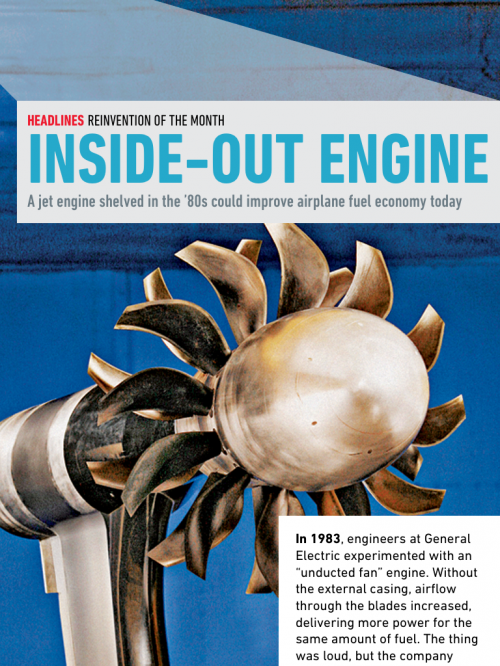
Popular Science +, the first digital magazine to emerge from Bonnier's Mag+, is a new way of experiencing magazines on digital devices and a first step toward our vision of what digital magazine reading can be. The Popular Science+ digital magazine features simple, fluid swiping motions let readers move horizontally through stories, while vertical scrolling allows them to read an article without interruption or distraction. In the app's unique Look mode, users can tap the screen to make the words disappear, highlighting the magazine's big, bold photos and illustrations. Another tap returns to Read mode.
The Bonnier Mag+ platform and the Popular Science+ magazine are based on 6 design principles:
1. Silent mode. Magazines are a luxury that readers can lose themselves in. Mag + has fewer distractions than the Web. It allows readers to lean back, away from the browser, and just focus on the bold images and rich storytelling. Reduced complexity increases a reader's immersion.
2. Fluid motion. Magazines are easy to browse, and Mag+ replicates that with a story-to-story navigation that's more like a panning camera than a flipping page. As we say, "Flow is the new flip."
3. Designed pages. Magazines are defined by their carefully conceived layouts that give readers an immediate understanding of the content and why it matters to them, a quality that got lost on magazine Web sites. Mag+ brings design back to digital publishing.
4. Defined beginning and end. Unlike the Web, magazines have a defined storyline and flow from front to back. Mag + returns to the notion that something can be, and wants to be, completed. It's the end of endlessness.
5. issue-based delivery. One of the great joys of magazines is that feeling of anticipation when a new one arrives. Mag+ maintains that by delivering full issues at once with all the same content as the print edition, and on the same schedule.
6. Advertising as content. Relevant, attractive advertising is as much a part of the magazine experience as the editorial content, and Bonnier wants Mag+ advertising to include both pin-ups and applications readers can appreciate.
Mag+ live with Popular Science+ from Bonnier on Vimeo.
Follow Bonnier and Mag+ here: www.bonnier.com/betalab, and check out Popular Science+ digital magazine on iTunes.
Saturday, April 24, 2010
The Future of Reading: Popular Science+ on Mag+


Monday, January 11, 2010
The Future of Reading: Printed Media (part 2)

But what’s in it for printed media?


Content is important. But, design matters as well.

Monday, October 13, 2008
Life 1.0: The killer application
Ok, this is the post i read at 1000Watt Blog, posted by Davison, but as i liked it so much, and i think it has some truths we nowdays often tend to forget, i wanted to share it with you too:
In a time past
We looked before we crossed.
We checked our change.
We spent only part of what money we had.
The rest we saved.
We read books from cover to cover.
And articles from headline to closing paragraph.
Because most writers were credible.
Friends had a vested interest.
They were few but sincere.
Who they were said much about you.
At a drop of a hat they'd come to your rescue.
People we knew could get us on the phone.
If they needed a job, they didn't reach out to our connections.
They called us direct.
Because anything else would be considered rude.
When we did something, we just did it.
We didn't write about it or call friends.
By keeping our thoughts to ourselves we preserved a part of us that made us seem ... dignified.
Today
Pedestrians have rights of way.
We use credit cards.
We scan.
And cite opinion as fact.
And get those facts from the greater depths of fiction.
We have a friend named Natasha who attends college in Minsk.
She found us on a social network and thinks we're hot.
Blake's a friend too.
He's friends with 286 of our other friends.
Including Natasha.
She thinks he's hot too.
We are all connected by six degrees of separation.
But we can only reach them through some third party's website.
Or pay to get access to these otherwise strangers.
Who will hardly ever hear, feel or care about the drop our of hat.
People do things then run to the computer to publish it for all to read.
Or they write fiction so the world believes they're doing something they really aren't.
But what they're doing (whether they're really doing it or not) has no impact on our lives.
Going forward
I'm not living in the past. Or knocking the present. But looking forward in the future, I hope we don't let technology or the euphoria we place on Web 2.0 replace the preciousness of real life or our accountability within it.
Personally, to me living 10,000 miles away from my native country with most of my family and friends being there, internet and all means of long-distance communications means a lot. Frankly, i couldn't live without having them 'in the reach of my fingertips'.
But i also try to go back to basics where i can. I call my (also long-distance) friends by phone, send them personal one-to-one e-mails (as snail mail letter would travel 2 months) and to those who are near me, hang out with them and try to be with them here and now. I try to balance both, because both of them do balance my existance. But i do try to keep that pristine personal touch in all of them.


 Posts
Posts


